
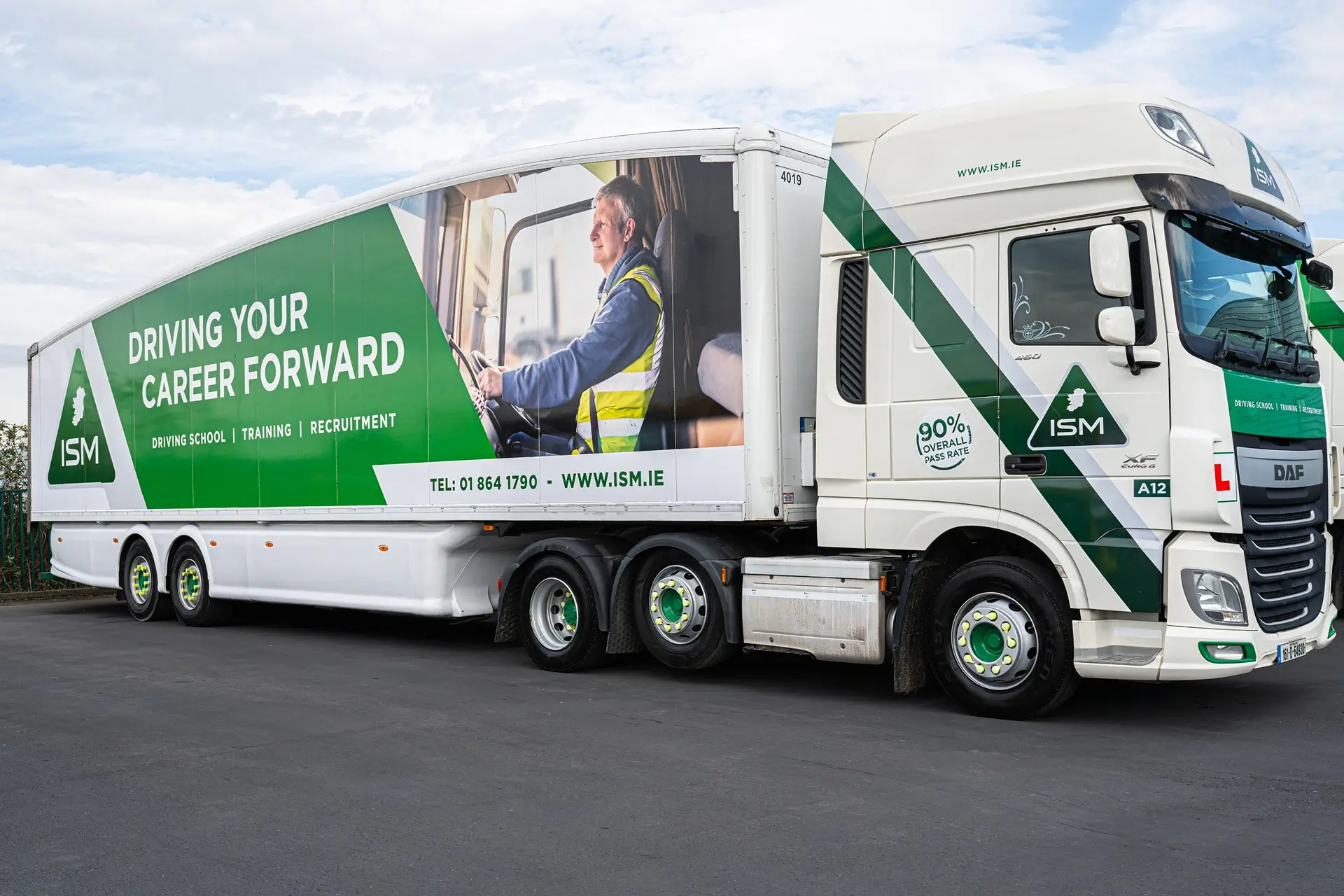
Reversing an Articulated Truck isn’t just a manoeuvre — it’s a test of precision, patience, and planning. For new drivers, it can feel intimidating, but with the right approach, it becomes predictable and repeatable. The challenge lies in managing the pivot point, controlling trailer swing, and maintaining calm under pressure. Every depot, yard, and loading bay presents unique obstacles, so building confidence through structured practice is essential. This guide breaks down the process into clear steps used by professional drivers. Follow these techniques and you’ll turn reversing from a stress point into a skill you can rely on every day. ISM provides HGV Reversing Bays to help all trainees prepare properly for their reversing manoeuvres.
1) Understand the Pivot
- Artics bend at the kingpin — your trailer amplifies small cab movements
- Small steering inputs in the cab create larger trailer angles
- Aim for gentle corrections rather than big swings
- Keep your steering alive but subtle — it’s all about control
2) Setup Is Half the Job
- Start straight, a few metres out from the bay
- Reference points: Choose fixed points (cones, bay lines, bollards)
- Trailer line: Visualise the final trailer path before you move
- Space management: Know your escape route if the angle goes wrong
3) Mirror Routine: Continuous & Deliberate
- Left–right–left scanning rhythm; include wide-angle mirrors
- Pause before committing to a larger correction
- Check trailer wheels and tail swing to avoid clipping
4) Micro-Adjustments & Speed
- Creep speed: Clutch control and light throttle
- One input at a time: Steer, then reassess
- If you drift off line, stop, straighten slightly, re-align the trailer
5) Avoiding Jackknife & Tail Swing
- Don’t chase the angle with big turns; it escalates quickly
- If the cab and trailer angle tightens too much:
- Stop → Pull forward a metre or two → Reduce angle → Restart
- Watch obstacles behind and tail swing around posts and stacked pallets
6) Use a Banksman When Available
- Agree clear signals (stop, left, right) beforehand
- Trust but verify with mirrors — you are responsible
7) Practice Routines That Build Muscle Memory
- L-shaped bay reverses (common in depots)
- Offset bay entries from different starting positions
- Blind-side practice in a controlled environment
- Night reverses using floodlights and reflective markers
Step-by-Step Guide to Perfecting Artic Reverse Parking
- Start Straight – Position cab and trailer aligned with bay approach.
- Visualise the Path – Identify reference points and trailer swing zones.
- Begin Slowly – Engage creep speed with clutch control.
- Mirror Scan Rhythm – Left-right-left before every adjustment.
- Apply Micro-Steering – Small corrections, never big swings.
- Pause & Reassess – Stop if unsure; forward reset if angle tightens.
- Watch Tail Swing – Especially near posts, pallets, and other trailers.
- Use a Banksman – Agree signals and maintain responsibility.
- Practice Blind-Side Reverses – Build confidence for real-world scenarios.
- Repeat Until Predictable – Muscle memory is your best ally.